Thursday, March 6, 2014

Bodybuilding Recipe: Strawberry / Blueberry Protein Shake

You know, I've written a lot of posts on this blog. But I just now realized that I've never written a single post about one of the more entertaining and fun aspects of bodybuilding: bodybuilding meal recipes.

I think a lot of that is due to the fact that.....well.....most of the meals that someone super dedicated to bodybuilding would prepare are not as heavily glorified and are anything but aesthetic and/or focused on flavor. I'm not sure how enticing I can make a meal of two-day old chicken breast with plain microwavable broccoli cuts and maybe a slice of cheese (if I'm REALLY feeling adventurous) in a Tupperware container look to someone who isn't used to that lifestyle. When you can eat cold chicken breast right out of the pan you cooked it in two days ago because you think warming it up would take too much time or is inefficient, only concerning yourself with consuming the macronutrients it contains, you know you've gotten to a point where you think of food differently than everyone you know.

But bodybuilding nutrition can actually be a lot of "fun". And by fun I mean interesting in the ways that those who live the lifestyle find creative ways to play to their primitive instincts while still staying true to their meal planning and goals. I've seen a lot of very creative and innovative recipes.

So today I'd like to share my recipe for what I think is a delicious strawberry / blueberry shake. The way that this shake is crafted puts an emphasis on getting in large amounts of protein in a quick refreshing shake while achieving and not doing too much harm to your macro goals. .

What you'll need:

*Blender

* 2 scoops of whey protein powder (Non-specific flavor. Use your favorite. Make sure it's isolate).

* 1/2 cup of frozen sliced strawberries - The only ingredient on the bag should be.....strawberries

* 1/2 cup of frozen blueberries - The only ingredient on the bag should be.....blueberries

* 1 cup of skim milk

* Cinnamon

* Nutmeg

* Ice

* OPTIONAL: Truvia sweetener

Recipe:

Step 1:
  • Using whichever container you will be blending in, add about half a cup to a cup of ice. The amount of ice you use is pretty arbitrary, and should be added to suit your preference. If you like thick shakes, add more ice, if you like smoother shakes, add less ice. Keep in mind that the frozen strawberries and blueberries will also cause the shake to thicken up.


Step 2:
  • Add in two scoops of your choice of whey protein isolate. If you're eating a massive amount of protein across allof your meals already, consider maybe only using one scoop of whey protein.


Step 3:
  • Add in your half a cup each of strawberries and blueberries. To be real with you, I'm guestimating the amount I put in. It might be a little more or a little less for you depending on how much shake you want and/or how much your blender container can hold. 


Step 4:
  • Sprinkle in some cinnamon and nutmeg. At this point, there's already going to be enough flavor once I add in the milk for me to enjoy drinking this shake. The natural sweetness from the strawberries and blueberries will also add to the flavor. BUT, for those of you who need more sweetness, consider adding in some truvia or other sweetener of your choice.

Step 5:
  • Add in about a cup of skim milk, or enough to where you'll be able to blend in and mix all of the dry ingredients. If you don't want to add any excess milk, consider adding in a little bit of water.


Step 6:
  • Start blending. Keep blending until all the ingredients are mixed. The whey might get stuck to the sides, so you might need to stick in a knife or something to scrape it off and re-blend. You don't want protein chunks when you're drinking this!


Macros:

Here are the macros for a single serving of this shake (results will vary depending on how much you make or what you add and/or subtract. This is based off of the quantities at the top).


Calories: 402.5

Fat: 3 grams

Carbs: 36.5 grams

Protein: 63 grams


*If you use one scoop of whey, this should bring it down to 282.5 calories and 39 grams of protein*


And there you have it. This is one of my favorite protein shakes to make and serves as a delicious way to get in your protein, as well as other beneficial nutrients from the ingredients used. Try making one today, and tell me what you think!

-Jtrain

------------------------------------------------------------------------------------------------------------------------------------------*Have a question about natural bodybuilding / fitness / nutrition / stress? Need some advice? Email me at jtrainfitness@gmail.com and I will answer it on this blog! Be sure to enter your email to receive alerts for when the next blog post has come out, and be sure to tell your friends about this blog! Follow me on twitter @jtrainfitness and tell your friends to do the same!*
------------------------------------------------------------------------------------------------------------------------------------------

Friday, February 28, 2014

What to Buy at the Supermarket

Many people know that nutrition is very important when bodybuilding and transforming your body. Many people know that there are macronutrients that need to be met on a daily basis to help achieve those goals. But some people starting out in the bodybuilding / body transformation game may not know what kinds of foods are important to always have in stock. So for today's blog post, I'll discuss some of the foods that I'm always looking for in the grocery store, and make sure that I have a constant supply of to meet my daily macros and achieve my nutritional goals.

The foods I'm including here are foods that have always been a core facet in my meal plans or consistently find themselves being part of my meal plan. These are foods that you should heavily consider making consistent players on your meal plan team when shopping at the supermarket.

Foods to look for

Protein

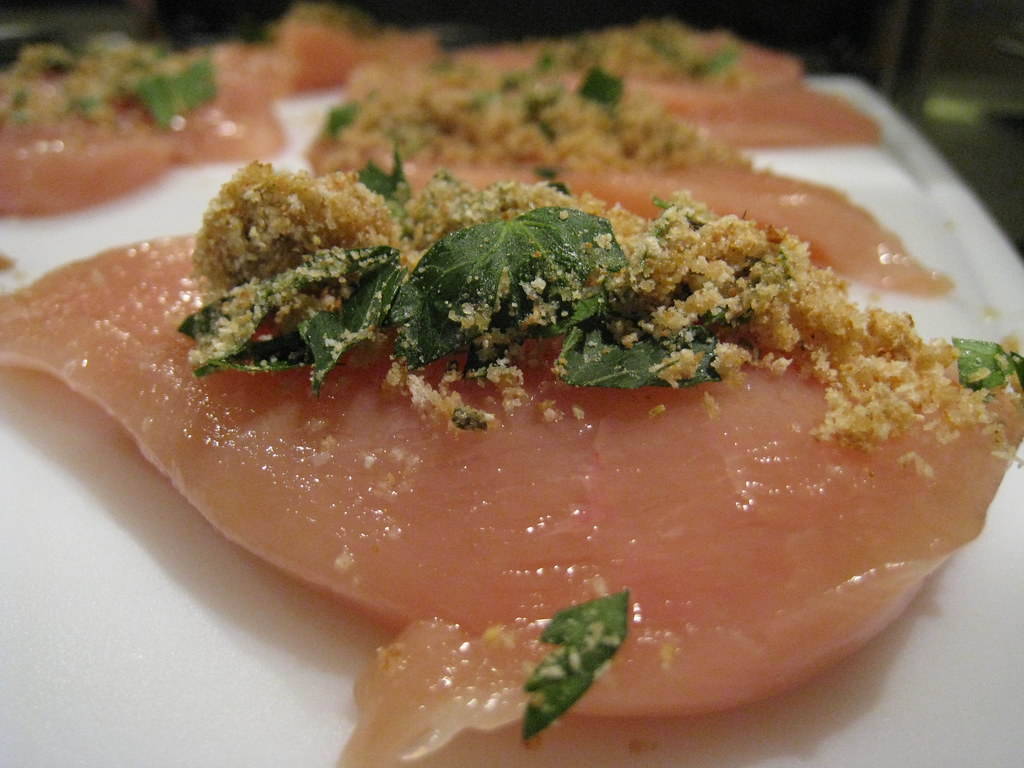
Chicken Breast / Meat Source
  • I group chicken breast different from "other meat sources" like beef, turkey, fish, etc because it's usually THE meat source when talking about bodybuilding. It's not specifically eaten during a bulk or specifically eaten during a cut. It's your standard protein meat source. But other sources like turkey, beef, fish, etc, are also good to have. I understand that things might be different if you're a vegeatarian (and other sources like bens and / or tofu should be considered), but it's always good to constantly have your fridge stocked with your main whole food meat source of protein. Buy it in bulk, and cook it in bulk so that you don't have to cook every single day.


Source: Flickr.com. User: megan.chromik. No changes made.


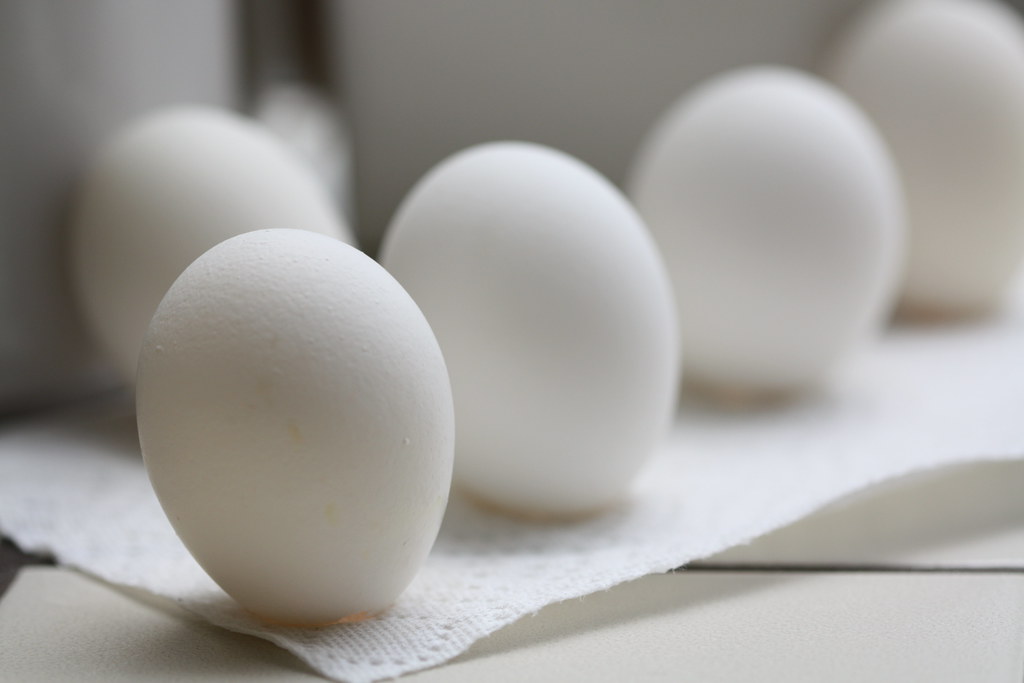
Egg Whites
  • I eat a lot of egg whites every day. Buy the cartons. If you want to crack and separate the amount of eggs you'll need to adequately meet your protein needs, then go nuts. Personally though, I like having a fridge stocked with a bunch of egg white cartons I can just open up, pour into a container, and microwave. In my opinion, any aspiring bodybuilder should not have a fridge without these in them. They're cheap, efficient, and macro / calorie friendly.

Source: Flickr.com. User: John Morgan. No changes made.

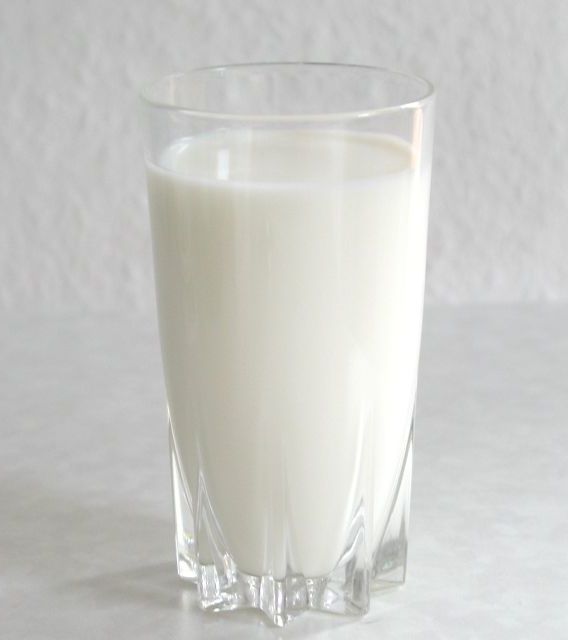
Milk
  • I understand that there are differing opinions on milk in a bodybuilder's diet. Personally, I always keep a gallon of skim milk stocked in my fridge because I enjoy drinking it in my smoothies and before I go to bed. It's liquid protein with some carbs added on the side if you're having trouble hitting that macronutrient. It's fairly inexpensive for the amount of you get, and it's loaded with beneficial nutrients for someone looking to bodybuild. Keep that moo-juice on tap!

Source: http://upload.wikimedia.org/wikipedia/commons/0/0e/Milk_glass.jpg

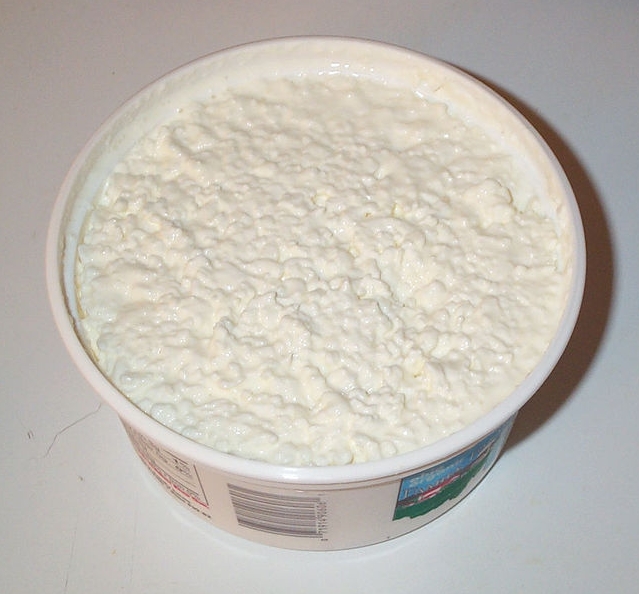
Cottage Cheese
  • Many of you just went "ewww!" when you saw this. And honestly, the first day I ate cottage cheese my mind did a nice big "NOPE" and I questioned if this stuff was even edible. But then I looked at the nutrition facts and found out there was like 20 grams of protein in half a cup in only 80 calories (fat free cottage cheese. Nutrition facts based on memory...so I could be wrong or off by a little), and realized that this was just going to be a fact of life for me. I add peanut butter to mine, but honestly after eating it for so long I've developed a taste for it and could eat it raw. I think you should always have a tub of this stuff on hand, but a lot of people can't stomach it. If that's the case, you have to ask yourself if taste or your body aesthetic is more important to you. Cottage cheese can also help you meet your carbohydrate needs.

Source: http://upload.wikimedia.org/wikipedia/commons/a/a1/Cottage_Cheese.jpg


Whey Protein
  • You probably can't find this in your supermarket, but it's still important to note it here. The fitness industry does a great job making you think you need whey protein. But you don't. However, I always make sure I have it stocked in my apartment. It's super efficient, it has an amino acid profile that's near impossible to beat, and actually is one of the most inexpensive forms of protein per serving. Some supermarkets DO sell it, but maybe not in the same quality as in say a specialty store. Just make sure you're getting pure whey protein isolate.


Source: http://farm6.staticflickr.com/5164/5373438313_8edbe88110_z.jpg


Carbs

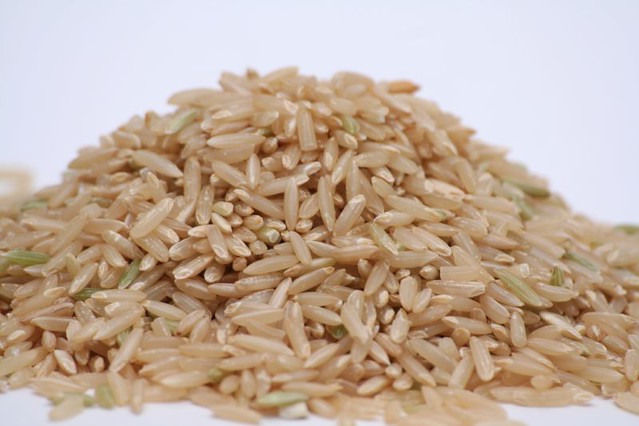
Brown Rice
  • I think this is the only carb source that I'm going to put down. But only because I'm talking about foods that you NEED to have stocked. There are certainly other carb sources you can consider like pastas, potatoes, breads, and rice cakes for example.

Source: Flickr.com. User: Rob and Dani. No modifications made.

  • I always have a pack of microwavable whole brown rice in my freezer for when I'm carbing up. Each bag contains about two cups of brown rice and is a very VERY helpful tool in helping you on your bodybuilding / fitness journey. It's a staple food in many bodybuilders' diets and something you should always stock up on when you visit your local grocery store.


Fats

Olive Oil
  • Every time I'm cooking a protein source, I'm using olive oil. It's a very important fat source to have on deck and is very helpful in hitting your macro goals for fats. Remember that with this and ALL fat sources, a little goes a long way calorically.


Source: Flickr.com. User: Maya83. No changes made.


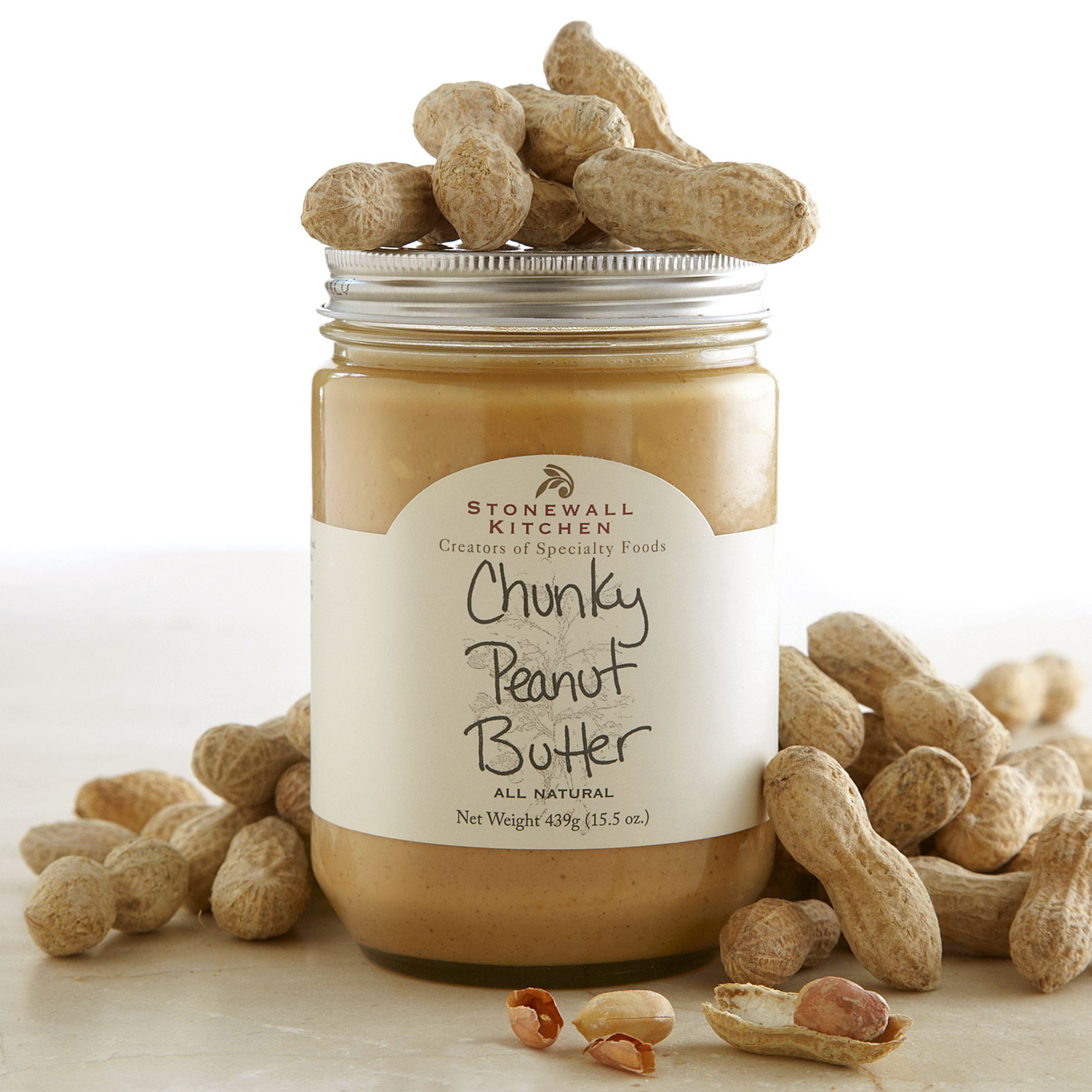
Peanut Butter
  • Much like milk, peanut butter and other nut butters are very controversial when it comes to the opinions of bodybuilders and whether or not to incorporate them into your diet. A serving the size of your thumbnail can literally start skyrocketing your calories and wreak havoc on your macros. Use sparingly, and be smart with your serving sizes. I keep a jar on handy but don't always eat peanut butter. If you get yourself some, make sure you get the all natural kind where the ingredients are practically just peanuts + very few other ingredients.


Source: http://farm6.staticflickr.com/5345/7091536099_2f84345247_o.jpg


And those are some essential food items you'll want to always be searching for at your local supermarket. Of course there are other food items you might want to buy and incorporate into your diet (like vegetables), but those are some of the staple foods that I personally always have on hand. Never have your kitchen absent of most of these items. You don't want to want to miss your macronutrient targets or, even worse, start winging your diet day to day and potentially destroying all of your hard work and discipline.


-Jtrain

------------------------------------------------------------------------------------------------------------------------------------------*Have a question about natural bodybuilding / fitness / nutrition / stress? Need some advice? Email me at jtrainfitness@gmail.com and I will answer it on this blog! Be sure to enter your email to receive alerts for when the next blog post has come out, and be sure to tell your friends about this blog! Follow me on twitter @jtrainfitness and tell your friends to do the same!*
------------------------------------------------------------------------------------------------------------------------------------------

Thursday, February 20, 2014

Should You Use Machines?


As I may have highlighted in earlier posts, the gym is a place where many different philosophies on bodybuilding, fitness, and nutrition (as well as ways to approach them) mix. One person may swear by some way of lifting / eating as the only means to get a certain body type, while someone else could say that doing the complete opposite is optimal. It truly is a melting pot of muscle-building and physique-sculpting theory.

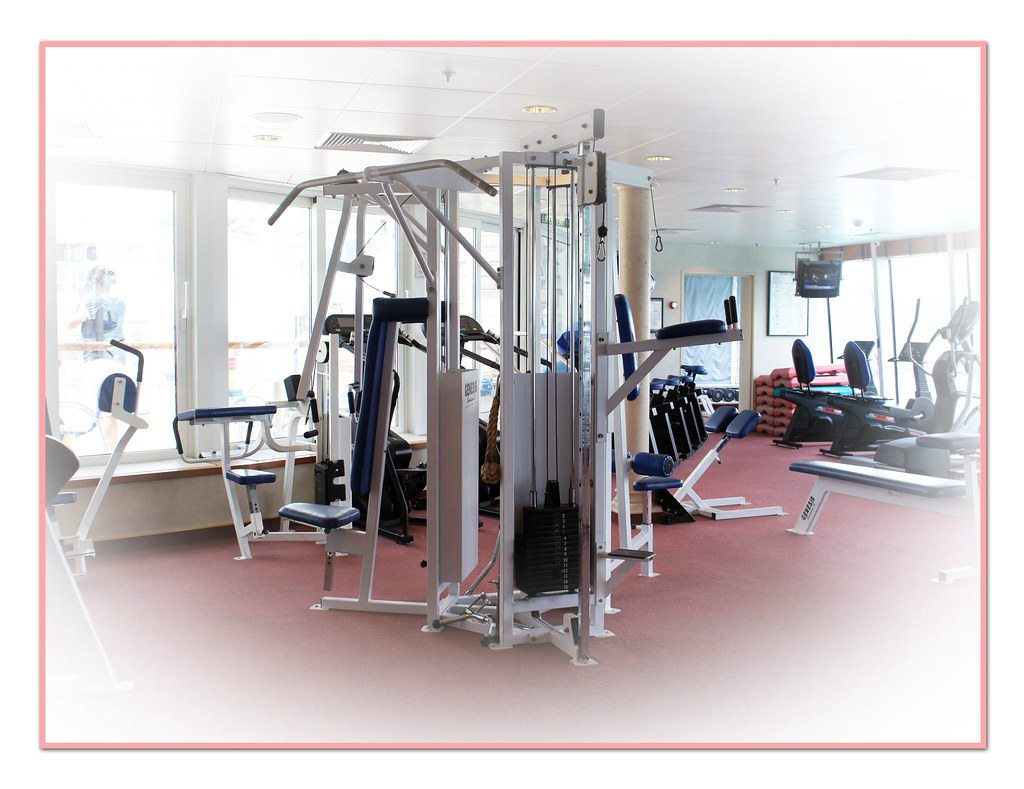
One such concept that appears to divide some gym-goers is whether or not to incorporate machines into a workout, and to what degree. Some people will forever swear by free-weights and raw lifting of weight, while others believe that using machines are necessary to hit different angles and stimulate optimal muscle growth.
 
 
Source: Flickr.com / Brisbane City Council. No Changes made.


Personally, I have absolutely no problem incorporating machines into my workout. While I'm a huge fan of using dumbbells and free weights when I can, I'm also a huge fan of many different machines in the gym.

For one thing, a lot of machines are highly specialized to target specific parts of your muscle and muscle groups. They accomplish this by making you position your body in a way that highly isolates different parts of your target muscle. This is a very important concept if you're bodybuilding, since isolating and stimulating very specific parts of your muscle groups is a key objective for optimal growth.

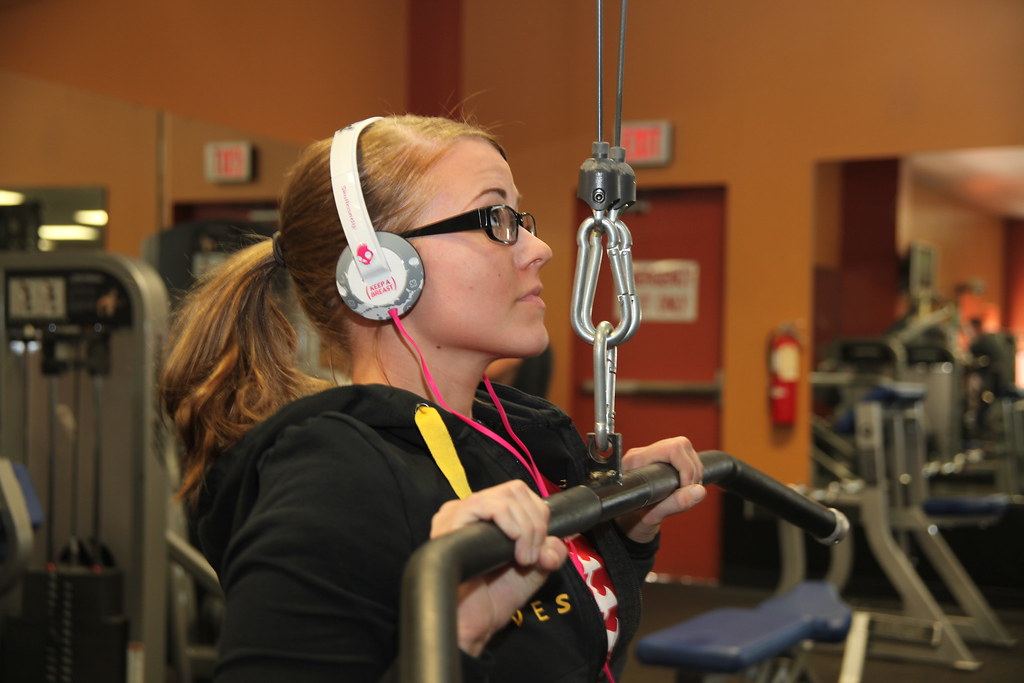
Machines can also offer a level of safety that using free-weights may not. For someone just starting out in the bodybuilding game, whose form and understanding of body movement, safety, and control is not yet fully developed, using machines that offer ways of adjustment and built-in safeguards may be a better option. Certain exercises may also have a greater odds of facilitating injury when done with free-weights as opposed to the same exercise and range of motion being done on a machine. Furthermore, machines can serve as a means to lift heavier amounts of weight without having to worry about taking the necessary precautions to prevent injury that would have to be accounted for with free-weights.


Source: Flickr.com / CherryPoint / No Changes Made


 But there are also things you need to look for and keep in mind when using weightlifting machines. While some machines offer fantastic stimulation for muscle growth, others can, for lack of a better phrase, be a complete waste of time.

Here are some questions you need to ask yourself when trying to find out if the machine you're using is worth it:

"Will this machine give me an optimal line of drive during my exercise repetitions?"

"Will this machine offer me an optimal full range of motion during my exercise repetitions?"

"Does this machine fully stimulate and pump my target muscle(s) at the end range of motion?"

"Does this machine fully stretch my target musle(s) at the negative end range of motion?"

"Will there be minimal to no recruitment of my non-target muscles when using this machine?"


Source: Flickr.com / alantankenghoe / No Changes Made


If the answer to most or all of these questions is yes, you're probably using a pretty good machine. Some of my favorite machines include the fly machine (pec deck), cables, triceps pushdown apparatus, certain plate loaded chest exercise machines, and (recently) the dip machine. Said machines are very good for optimal stimulation of many different muscle groups with proper form.

If the machine you are using requires more effort than is needed, and subsequently results in poor range of motion and pump / stimulation of your target muscle, it's not worth it. If there is not enough stress or tension put on your target muscle it's also not worth it. Also, and perhaps most importantly, if the machine you are using causes you to feel unwanted pain or makes you feel like you could potentially injure yourself, do not use that machine.

During my workouts, I like to incoporate a lot of free-weight exercises when I can. But machines have always had a place in all of my workouts, on every day I choose to workout. Machines can be a fantastic ally for pushing maxes and growing bigger when done right, and offer a level of safety and understanding of movements for those just starting out in the bodybuilding game. See if incorporating machines into your workout works for you or brings you any success, and don't worry about those who swear by and try to get you to use free-weights exclusively.

-Jtrain

------------------------------------------------------------------------------------------------------------------------------------------*Have a question about natural bodybuilding / fitness / nutrition / stress? Need some advice? Email me at jtrainfitness@gmail.com and I will answer it on this blog! Be sure to enter your email to receive alerts for when the next blog post has come out, and be sure to tell your friends about this blog! Follow me on twitter @jtrainfitness and tell your friends to do the same!*
------------------------------------------------------------------------------------------------------------------------------------------

Thursday, February 13, 2014

How Many Reps?

Before I start off this new blog post, I'd like to thank everyone who has read this blog or continues to read this blog. Recently, I had a goal of hitting 5000 all-time views, and have recently surpassed that goal. So, to all of you from all around the world who read this blog for bodybuilding / fitness / nutrition advice, thank you so very much! Here's to 5000 more views!

So now for today's post.

When working out with people, I often get the question on how many repetitions you should be doing per set for any given exercise. And there are many philosophies on this. Some believe that lower rep ranges with heavy weight is ideal for packing on slabs of muscle, while higher rep ranges with lower weight is ideal for muscle definition and hypertrophy. There are those who also caution against "overtraining" and, of course, there are proponents for incorporating or cycling all of these various approaches into your workouts.

Source: flickr.com. User: Pascal


So what do I think? I actually DO have an opinion on this, and promise that my viewpoint on this topic won't be as non-conclusive as a bunch of my other blog posts.

I like to think of my muscle as a student in a classroom. If you, as a student, were able to get an A in a class without ever doing any of the homework or study.........would you ever do any of the homework or study? I feel the same thing applies to muscle growth.

In my opinion, if your muscle has absolutely no reason to grow, it won't. If there is no stimulus powerful enough for it to send whatever biological signals it sends throughout the body to indicate that there is a stress on them greater than they can handle, they will have no reason to want to grow / produce more muscle tissue. If you don't have your muscle tissue screaming at you and / or wondering WHAT the heck was just unleashed on them, they won't try to prepare for the next session of absolute chaos.


Source: farm9.staticflickr.com
 
Muscle takes a lot of effort and resources for your body to build and maintain. It doesn't just store muscle from the food you eat. It's a biological process of breakdown, repair, and strengthening. In other words, it's not really a process that your body wants to go through unless it really feels it needs to. In a lot of biological systems, the path of least resistance is almost always the chosen one, and thus your body doesn't just start magically producing muscle without enough stress and stimulus.

That's why I'm an advocate of not focusing on the repetitions at all. What I mean by that is, go until failure on ever single set you ever do in the gym. Some of you are HIGHLY against this, but from the very beginning until the very end I will be an advocate of training until failure. (To review, lifting until failure means you are trying as hard as you can to lift the weight during your repetitions, but your body is making you unable to continue lifting it).

Now, the weight you choose is the non-constant variable here. I do think that the weight you choose is important, and that there IS in fact a rep range you should shoot for. But don't take that as me saying you should stop once you hit that range.

When I started bodybuilding, I would make sure that I hit at least 8-12 repetitions on every single set I did. And if I couldn't hit that with the weight I was using, I'd immediately drop-set to a weight I could keep lifting with until I was in that range of repetitions and continue until failure. If I went over that rep range, perhaps I would increase the weight until I failed within that range. If I kept having trouble hitting that range, perhaps I'd consider lowering the weight on the next set.


Source: blog.csharplearners.com


And I do think that certain weights do offer different types of stimulus to your muscles. Heavier weights (relative to YOUR size and strength), where form is somewhat sacrificed (but should never be fully sacrificed) are good for overall increases in size, while semi-heavy (NOT LIGHT) weight with extreme focus on form helps with muscle separation and changes in definition (though, leanness and definition will always be more of a nutrition thing in my book).

There is also a time-under-tension and consistency of lifting discussion that could and probably should take place here, but that's for another blog post. But the next time you find yourself in the gym, wondering how many repetitions you should do in the gym, immediately yell at yourself for thinking that there's a set number for you to stop at. Aim for a rep range of 8-12 repetitions, and use a weight that makes you fail around that range. If you can keep lifting past that, keep going until failure and consider increasing your weight on the next set. If you fail before that range, consider lowering the weight a bit.

I hope that helps! Have fun using what was discussed here during your next gym session!

-Jtrain

------------------------------------------------------------------------------------------------------------------------------------------*Have a question about natural bodybuilding / fitness / nutrition / stress? Need some advice? Email me at jtrainfitness@gmail.com and I will answer it on this blog! Be sure to enter your email to receive alerts for when the next blog post has come out, and be sure to tell your friends about this blog! Follow me on twitter @jtrainfitness and tell your friends to do the same!*
------------------------------------------------------------------------------------------------------------------------------------------

Tuesday, February 4, 2014

Nutrition Hacks - High Fiber and Water

Hello! And welcome to another edition of "Nutrition Hacks"!

I've gotten some good feedback from this ongoing "Nutrition Hacks" series, and thought I'd continue with another one in today's post. For this hack, I'd like to discuss ways in which you can manipulate your nutrition by ingesting foods that make you feel fulller quicker / longer and curb your appetite so that you do not feel the urge to overeat.

What you eat is important to your bodily aesthetic (surprise!), and most of us looking to alter our aesthetics are in tune with this. While bodybuilders and fitness enthusiasts alike are all still pretty much on the same page as to what kind of foods they need to eat to stimulate and / or alter their bodies, a lot of them fall short on figuring out ways to make the grind and mental struggle a little easier to deal with on a day to day basis.


Source: withamymac.com


This is why I suggest to those of you looking to alter your bodies, but find it hard to eat strictly and cleanly most of the time due to your love of food and propensity for snacking, to incoprorate more high fiber foods into your diet and to constantly drink water. 


Source: algaeindustrymagazine.com
 

The reason for this is that high fiber foods (beans, vegetables, nuts, etc) and water make you feel full very quickly, and suppress your appetite and increase satiety. Water and high fiber vegetables are also very low on calories and thus can be incorporated in every meal in very generous amounts without obliterating your dietary macros.

In searching for systematic reviews to back up the claim that fiber, water, and fats do in fact make you feel fuller, I was actually unable to find any significant studies that support this claim. However, it's always good to take nutritional research with a grain of salt, as monitoring peoples' diets and making all things equal in said diets is an extremely difficult undertaking. So if you're disappointed by my lack of scientific backing or evidence, and think I'm being way too anecdotal, please forgive me. There might be a lot of personal experience and bro-science involved with the claims and suggestions you are about to read.


FIBER

I think that many of us will agree that foods high in fiber make us feel really full. If you're not sure about this, try eating through a can of beans right now and tell me how successful you are without hitting a food wall at full speed.

Fiber can be broken up into soluble and insoluble fiber. Soluble fiber dissolves in water and can help lower blood cholesterol and regulate blood sugar. Insoluble fiber does not dissolve in water and promotes movement of food through the intestines and regularity.


Source: khoemoingay.edu

Fiber aids in early and prolonged signals of satiation (fullness) due to its unique physical and chemical structures, which can help those trying to lower body fat percentage through a decrease in food intake or those who find it difficult to stay full throughout the day.

Fiber has also been linked to the prevention of such diseases as heart disease, type II diabetes, and colon cancer. Fiber also helps with overall colon health.

I highly recommend adding vegetables to every meal. They are low in calories, and provide a massive amount of fiber. They also provide beneficial vitamins to your diet.


Source: sproutnewroots.files.wordpress.com

 
You can almost eat all of the vegetables you want in a day and feel nice and full afterwards. High fiber foods you could also use in your diet include nuts, oats, brown rice, and whole wheats. Fruits are also a nice source of fiber (when eaten whole) when eaten sparingly.


WATER

As I'm sure you are well aware, water is important to your body. It's really unbelievable how vital water is to producing the right type of environment inside your body, whilst also aiding in many important biological processes. I've briefly gone over water in one of my blog posts, which you can find here.


Source: 4.bp.blogspot.com


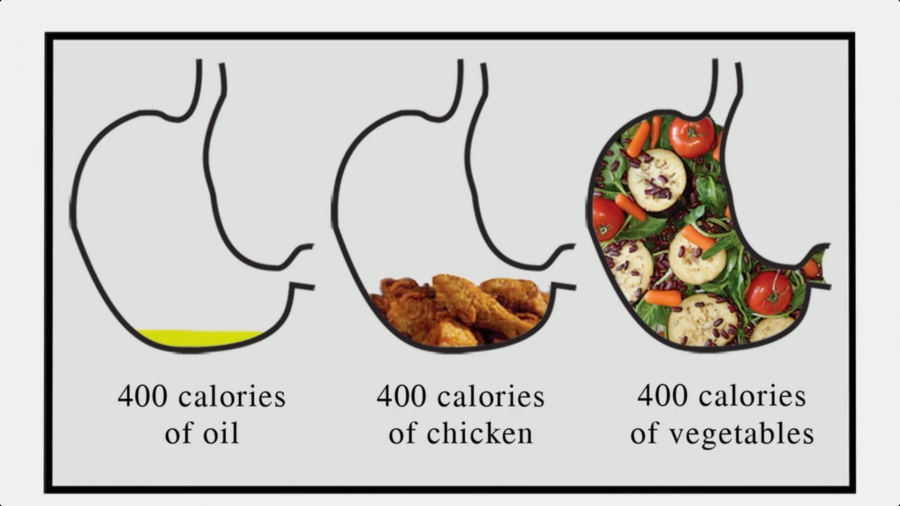
If you're bodybuilding, or doing anything fitness oriented, you should always be drinking lots of water and staying hydrated. But water can also be a useful tool in making yourself feel full. I believe that this is simply because of the space that the water fills up within your stomach, and if you're drinking lots of water throughout the day, you can constantly be filling up your stomach and stay fuller longer. Water also has no calories, so you can fill yourself up without harming your diet!


OTHER CONSIDERATIONS

Other considerations you can take to make yourself feel fuller include incorporating more whole-foods into your diet. Eating more whole-food protein and getting the majority of your calories from solid food will fill up more space in your stomach and take longer to digest than say liquid forms of calories (I believe). It has been argued back and forth that incorporating more fats into your diet also slows down the digestion process of foods and in turn keeps you feeling more satisfied longer (allegedly). Furthermore, consider lowering your carb intake to regulate insulin and blood sugar so that you do not become accustomed to sugar cravings.


Food hacks like this can really help aid in making the experience of dieting and meal planning easier to deal with during the times of the day where you crave foods or are tempted to eat things that will throw you off of your dietary plans. Try using this food hack and see if it helps keep your mind off of food cravings and achieve dietary success!

-Jtrain

------------------------------------------------------------------------------------------------------------------------------------------*Have a question about natural bodybuilding / fitness / nutrition / stress? Need some advice? Email me at jtrainfitness@gmail.com and I will answer it on this blog! Be sure to enter your email to receive alerts for when the next blog post has come out, and be sure to tell your friends about this blog! Follow me on twitter @jtrainfitness and tell your friends to do the same!*
------------------------------------------------------------------------------------------------------------------------------------------


Thursday, January 30, 2014

The Jtrain's Tips on Preventing Sickness

Ah yes.....it's that time of year again. Everyone you know seems to be incapacitated by some form of cold, flu, or other nasty transmissible disease. And as everyone around you falls victim to this, you find yourself hoping that you're not the next to be infected.

But why am I writing about this on a fitness / bodybuilding blog? Well, being sick in my opinion does in fact fall into the realm of health and wellbeing. Also, being sick is something that can keep you out of the gym for a considerable amount of time, or have an impact on your nutrition, which are things that any person trying to attain aesthetic success doesn't want. Furthermore, as someone with degrees in both biology and public health, this is a topic that really interests me.


Source: medclient.com


Before we get into the ways you can help prevent yourself from getting sick, let's talk about the biggest myth that comes along with illness, while also covering how some of the most common pathogens during this time of year spread.

When it comes to causation of illness during this time of year, the biggest myth that seems to be perpetuated by most people I have discourse with on this topic is that it's the cold making people sick. It seems people will debate me until they're blue in the face that a decrease in temperature has some magical power to infect you with disease. That forgetting to wear gloves or having the audacity to not put on ONE more layer of clothing was the gamechanger in inviting mother nature into your soul to wreak having and incapacitate you for days or weeks.


"YO INFLUENZA! COME AT ME BRO!!!!"
Source: wordpress.com


Now, I actually accept that the cold may play SOME role in making you more susceptible to illness in that perhaps your body's biological mechanism of decreasing bloodflow to your extremities and pulling warmth in towards your core may decrease the efficiency for your white blood cells to optimally patrol your body and destroy pathogens. Temperatures during colder months may also be the optimal temperature for some pathogens to survive for longer amounts of time, thus increasing the likelihood that they may find and infect someone. The cold may also lead to dryer nasal passages, which may decrease the amount of mucousal protection you have when inhaling pathogens. Furthermore, the cold may actually strengthen the membranes of said pathogens and make them more resilient, sturdy, and tough, thus making them harder to destroy once entering the body.

But make no mistake about it. The cold can kill you, but it cannot inoculate you. What I mean by that is that humans are not evolved for colder temperatures / climates (which is why people who say they enjoy the cold are out to lunch), and can die from prolonged exposure to cold temperatures without proper protection. But the cold is not an agent of infection. The cold is not a pathogen. Viruses like the cold and flu ARE pathogens, and can infect you in the right situations regardless of what month or season it is. And, if there are no pathogens around, regardless of whether or not it's cold or hot, there is nothing to infect you and you will in turn not become sick or infected. People often look at me with shocked faces, or looks of disgust, when they see me walking around town this time of year with shorts and a tank top in 20 degree weather because I refuse to bring pants and a jacket to the gym. They tell me I'm going to get sick because of it, and each year the cold never gets me sick.

So then what causes people to be sick? Well, many things. Many agents work in many different ways. And while I'd love to discuss all the different pathogens and their modes of transmission, I'd like to focus on the two most commonly discussed during this time of year: the cold and the flu.


Rhinopharyngitis (The Common Cold)

The common cold is an infection of the upper respiratory tract, which mainly affects the nasal area of infected individuals, and is most commonly caused by a rhinovirus (wikipedia.com). The cold is spread by aerosolized (airborne) droplets from one infected person to another, or direct contact with nasal secretions containing the virus. The symptoms related to the cold are an immune response to being infected.


Source: virology.wisc.edu


The cold is the most common human disease and affects all people globally. The elderly are at increased risk due to a weakening of the immune system as they age.

The incubation period (when the virus is replicating inside you but you do not yet experience symptoms) for the cold is 1-3 days and symptoms can persist for a week or two (healthtap.com).


Influenza (The Flu)

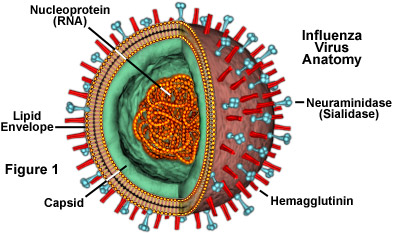
The flu, or influenza, is a ribonucleic acid (RNA) virus from the family Orthomyxoviridae. Flu infections are infections of the respiratory system and can be transmitted contagiously as an aerosol through inhilation of viral droplets from coughing and sneezing from an infected individual. The main types of flu types are types A and B (type C is also possible) and are responsible for seasonal flu illness (cdc.gov). Type A viruses mutate very fast and can take on many different serotypes (variations among species depending on surface antigens) and cause the most severe illnesses. Type B flu viruses mutate slower and aren't as varied as type A flu viruses and is easier to build an immunity against and prevent (wikipedia.com). Individuals are contagious and can spread the flu a day before symptoms are present to around 7.5 days after symptoms are present, and symptoms can persist for multiple weeks. The young and elderly are especially vulnerable to becoming infected with the flu.


Source: magnet.fsu.edu


Because the flu virus is a virus, mutates frequently, has a long contagious time frame, and has an extremely efficient mode of transmission, it is hard to combat and prevent individuals from getting infected by it.

Each year, a flu vaccine is created to combat what is believed will be the most common flu types circulating each season.


Techniques for Preventing Sickness:
As someone who considers himself to be extremely germophobic, I've developed some techniques for myself that I think have greatly helped me in preventing myself from being sick. You may agree or disagree but, through my understanding of how germs spread and aseptic technique, I think that some of these could really help you in preventing sickness during this time of year and even year round.


WASH HANDS ALL THE TIME / WATCH WHERE YOUR HANDS ARE

It all starts with the hands folks. They are the one part of your body you need to be most concerned with when transferring disease. We do everything with our hands, and in turn touch everything with our hands. From gripping old dumbbells in the gym that 50 people before you have touched in the last hour, to high-fiving a friend who forgot to wash their hands 10 minutes ago after going to the bathroom, to touching doorknobs that everyone else in your office who coughed and sneezed all over their hands before touching said knobs have come into contact with before you, our hands serve as a rally point for all sorts of germs to wait patiently to infect you.


Source: positivelygoodproductions.com


This is why you have to always be cognizant of what you've been touching on a daily basis, so that your dirty hands do not come into contact with food or rub your eyes / touch your face, which are entry points for pathogens to set up shop inside you and start to spread. If at all possible, do not let your hands come into contact with your face at all, and make sure there is some kind of barrier between your hands and the food you are holding (a wrapper, utensils, etc). Consider also using the outside of your palms instead of the inside of your palms to touch your face with if absolutely necessary.

If washing your hands are not THE #1 method for which to prevent the spread of disease, it's certainly close. Making your hands as close to a sterile environment as possible is of utmost importance. They just come into contact with too many germs and infectious material for you to disregard this. You rub your hands on your face way too much for you to ignore this. Wash your hands, and wash them often. It takes almost no time at all, is cost effective, and goes a very long way at making sure you're staying healthy and free of illness. And this doesn't just go for colder months, but year round as well.


Source: msutoday.msu.edu


During colder seasons however, hands tend to become dryer. That fact, along with the fact that soap drys your skin further, can lead to cracks and bleeds in your hands. I recommend having a good skin lotion available to rub your hands with on the regular along with frequent hand washing to make sure your skin stays smooth and healthy and free of annoying cracks and tears, whilst also keeping them as germ free as possible.


SLEEP

Everytime I get to talk about sleep, I will highlight to you that it is the most underrated supplement of all time. Nobody seems to want to talk about the importance of sleep, and yet it affects pretty much EVERYTHING about you, from temperment, to muscle growth, to energy, and to health. If you are not actively trying to pay attention to your sleep patterns and how you can get as much sleep as possible in the most efficient way possible, you are doing yourself a huge disservice. I've discussed the importance of sleep in a blog post before, which you can view here.

Your body heals itself when you sleep. But most importantly, as it pertains to this blog post, your immune system is strengthened or weakened depending on how much sleep you are getting. Lack of sleep has been linked to T-cell impairment (webmd), as well as other factors that lead to immune system repression.


Source: i.telegraph.co.uk


Lack of sleep can lead to more frequent and more prolonged sick days. Make sure you're getting enough of it. Devoting a few extra hours to sleep to me is well worth the consequences of not doing so. And I feel you should feel the same way.


AVOID INTERACTION WITH THE SICK

I don't care if your girlfriend / boyfriend questions how much you love them. I don't care if you spotting a guy who's still infectious in the gym on bench / dumbbell press looks awkward because you don't want him blowing in your face. I don't care how awesome your friends are. If any of these people are sick, interaction with them compromises your health. Is it really worth it? And if any of these people are really worth it, they would understand that you don't want to perpetuate a virus / other infectious agent by having it constantly infect the both of you or spread to you so that you could potentially spread it to someone else.


Source: cache.desktopnexus.com


If you know someone is sick, keep your distance from them. Do not let them cough or sneeze in your face. After shaking hands with them, immediately wash yours. Stay away from any material that they have come into contact with, and cover your nose and mouth if they start coughing and / or sneezing in front of you without covering their face.

It's kind of like a game of keep away!


OTHER TIPSThere are other techniques you could use to improve your chances of preventing yourself from getting sick. Here are just a few:

1) Drink lots of water

2) Clean surfaces and objects in your house

3) Don't stress out easily


And there you go. Now that you have a better understanding about the modes of transmission for some of the most common infectious agents during this time of year, along with some ways for you not to become infected, you can do your best to prevent yourself from falling victim to sickness and being sidelined from dominating the game of life and giving your all to do the things you want to accomplish most in life.

Feel free to offer some advice of your own in the comments section below!

Stay healthy Jtrain Nation!

-Jtrain


------------------------------------------------------------------------------------------------------------------------------------------*Have a question about natural bodybuilding / fitness / nutrition / stress? Need some advice? Email me at jtrainfitness@gmail.com and I will answer it on this blog! Be sure to enter your email to receive alerts for when the next blog post has come out, and be sure to tell your friends about this blog! Follow me on twitter @jtrainfitness and tell your friends to do the same!*
------------------------------------------------------------------------------------------------------------------------------------------


Thursday, January 23, 2014

Nutrition Hacks - Daily "Cheat Meal"

Nutrition is always the most important thing when it comes to bodybuilding and physique transformation. I'll always come back to that concept and make sure that my readers always know what my stance is on that topic. Unlike those who train for sports to become stronger or more proficient at some skill set or ability, those interested in changing their physique aesthetic should never be led to believe that the gym is where you make your gains and set yourself up for success. Bodybuilding and physique transformation is almost enitirely a result of what you do OUTSIDE the gym.

For those of you who understand that, you also realize how much harder it is to commit to nutrition than anything else as you strive towards your goals in fitness. A workout can last 45 minutes - 2 hours or so and it's finished, but nutrition is ALWAYS with you. As human beings, our bodies have evolved a propensity to store as much energy as possible. Your mind will literally do anything it can to make you consume as many calories as possible, and try its best to completely shut you down and make you feel awful when it feels like you are in any way trying to use up calories or trying not to consume them. 


Source: complete-bodybuilding.com


As you diet throughout the week, things might be going easy the first couple of days since the last time you took it easy on your diet or had a "cheat meal" (a meal you ate due to taste / for pleasure rather than for efficiency in macros). But, as you go further and further from that meal, you start to feel worse and worse as your body becomes deprived of tasty, high caloric foods that you have grown to love depending on how clean your diet is. And while some may be experienced enough with dieting that they can handle a mostly clean diet and the psychological hurdles they have to overcome in eating that way, many people find it hard to eat almost completely clean or have a super strict diet. Those who dive right into a clean diet or diet so hard that their body is screaming for a little bit of leeway will also often times find themselves caving into the pressure and binge-eat.    

             
Source: attitudereconstruction.com


But I'm here to once again offer advice on how to prevent this from happening. As a continuation of my "nutrition hacks" series, I'd like to offer more of these hacks that have helped me stick to a mostly clean diet over the years and have given me success with my aesthetic. And for today's post, I'd like to discuss the nutritional hack of daily cheat meals.
 
If you're new to the dieting game, be sure to check out my first nutritional hack post located here. It's a really good technique to use, especially to help make sure you don't crash or binge eat / give up too early into whichever dieting lifestyle you want to have. Using the concepts outlined in that post are good to pair up with the concept I'm about to describe.
 
If you bodybuild, or are interested in bodybuilding, chances are you will at some point come across the concept of "cheat meals". Cheat meals are simply meals that are eaten for pleasure and not because they are macronutrient efficient or important to maximizing your aesthetic and making gains. It's a meal that could break your diet or slow your progress, but eaten to satisfy cravings.
 
  
Source: peterblacksbooks.files.wordpress.com
  
While some of those in the bodybuilding community will suggest having a cheat meal for one day every couple of weeks, to one day out of the week, to multiple days out of the week, I offer another suggestion. And that is to have a small cheat meal every day.
 
I'm hesitant to use the word "meal" in this nutritional hack, because it's not necessarily a meal. Rather, I suggest having a small......something......every day that you can look forward to and plan into your diet. The benefits of doing this, in my opinion, are as follows:
 
 
1) Eating something you enjoy every day keeps you from losing your mind and building up huge cravings that could potentially lead to binge-eating and destroy your dietary progress

2) Planning a small cheat meal meal makes you feel less guilt, as you planned for it, and therefore makes you less inclined to quit on your diet or believe that you screwed everything up to the point that it's not worth continuing to diet hard


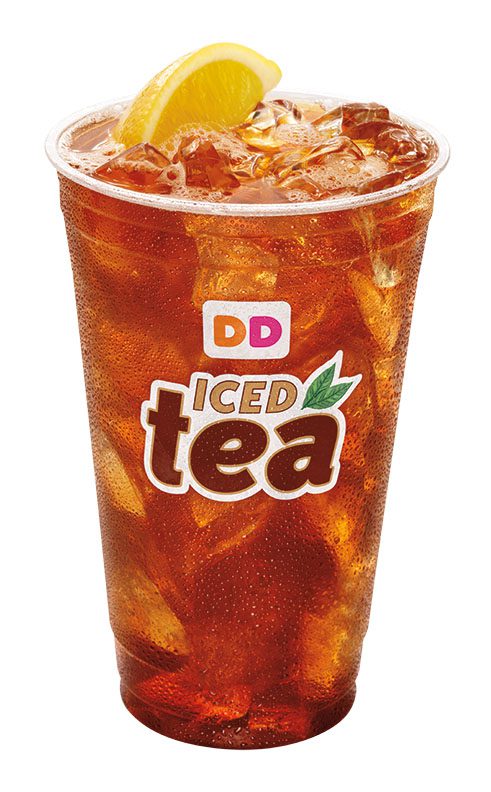
For the majority of my bodybuilding career, up to a year ago or so, I would make a point of having a large half-sweet tea and a cinnamon-raisin bagel with peanut butter from Dunkin Donuts every day. Now, this of course wasn't the best option for a solid meal plan. However, it kept the cravings I had at bay, while not necessarily COMPLETELY destroying my nutrition. It kept my mind focused and fresh, and allowed me to have somewhat of a mental / nutritional "rest" before continuing to diet hard, clean, and well for the rest of the day. I also tried to incorporate SOME kind of nutritional gain in this meal by getting some healthy fats and protein from the peanut butter at the same time.


LIQUID GOLD
Source: kouponkaren.com

Your daily cheat meal can be anything. If you like sweet foods, have ONE donut, or ONE brownie a day. If you like salty foods, have one of those small bags of potato chips every day. It can be anything you enjoy. Just make sure the portion size is modest.

It's also important to suggest that your daily cheat meal be at the time of day you think you'll need it the most. If you get your cravings early on in the day, have it earlier. If you get your cravings later, have it later. If you want your mind to be mentally prepared and fresh for a workout, have it before a workout. Be strategic with it.

While it's cool to make everyone think you're some kind of inhuman beast who can eat nothing but cardboard made out of whey protein for every meal every day until eternity, at the end of the day we're all still human. I don't believe in the whole "eat in moderation" b.s. that people keep trying to sell me (if you want to look extreme, you have to do extreme things), but I don't believe a natural bodybuilder needs to eat 100% clean 100% of the time. I think that sprinkling in some foods that you enjoy of moderate portion size can be very beneficial to your success. While bodybuilding to me will always be considered serious business, it's ok to have fun every once in a while and enjoy life within your lifestyle.

So find a small cheat meal you can enjoy every day and feel good about eating it. Hack your nutrition to keep yourself steadfast on your road to aesthetic success! Dominate that nutrition!

-Jtrain


------------------------------------------------------------------------------------------------------------------------------------------*Have a question about natural bodybuilding / fitness / nutrition / stress? Need some advice? Email me at jtrainfitness@gmail.com and I will answer it on this blog! Be sure to enter your email to receive alerts for when the next blog post has come out, and be sure to tell your friends about this blog! Follow me on twitter @jtrainfitness and tell your friends to do the same!*
------------------------------------------------------------------------------------------------------------------------------------------